
Article
Beyond Geography: Dynamic Operating Models for Market Expansion and Portfolio Transitions
Geography is a good starting point, but building a Global-Local operating model is about much more than proximity.
Read More

The May 2025 Most Favored Nation (MFN) executive order aims to align US drug pricing with the lowest prices paid by other developed nations. On the surface, it is a pricing policy. In practice, it is something more consequential.
Read More

Does your "successful" technology implementation feel like a failure? It's more common than you think. This article covers nine reasons technology implementations leave organizations wanting more.
Read More

Complex organizations tend to have complex product catalogs. As those catalogs expand and evolve, pricing models become more nuanced, configurations more interdependent, and more stakeholders become involved in how deals are structured and approved. Quoting complexity follows naturally. Managing that complexity — and finding tools capable of supporting it — becomes its own challenge. This is the environment Salesforce Revenue Cloud Advanced was designed to support.
Read More

AI can accelerate life sciences, but only if operating models evolve with it. Five dimensions define whether AI is embedded structurally or stays a pilot.
Read More

If the person who understands your platform best becomes unavailable tomorrow, could your organization confidently maintain the system, continue improving it, and onboard someone new? Key person risk poses a critical threat that organizations rarely address until it is too late — but managed services offer a solution.
Read More

AI agents that can read, write, and act across systems are making traditional integration obsolete. The question many firms are now asking: Should we maintain 20 specialized systems when AI agents can deliver comparable capabilities using 5-7 core platforms? The economics increasingly suggest the answer is no.
Read More

For decades, procurement and finance have been uneasy allies. One holds the purse strings. The other spends the money. In theory, they share the same goals. In reality, they often operate at cross-purposes — slowing each other down, duplicating efforts, and moving out of sync.
Read More
Explore expert insights and practical perspectives from the Acquis team on the trends and topics shaping today’s business landscape
Geography is a good starting point, but building a Global-Local operating model is about much more than proximity.
Read More

Combinations are not new. What is new is the velocity. The number of regimens pairing established immuno-oncology (IO) agents with novel molecules and mechanisms has grown significantly year over year, and the data supporting those pairings is maturing in ways that carry real implications for patients, drugmakers, and the broader life sciences investment thesis.
Read More
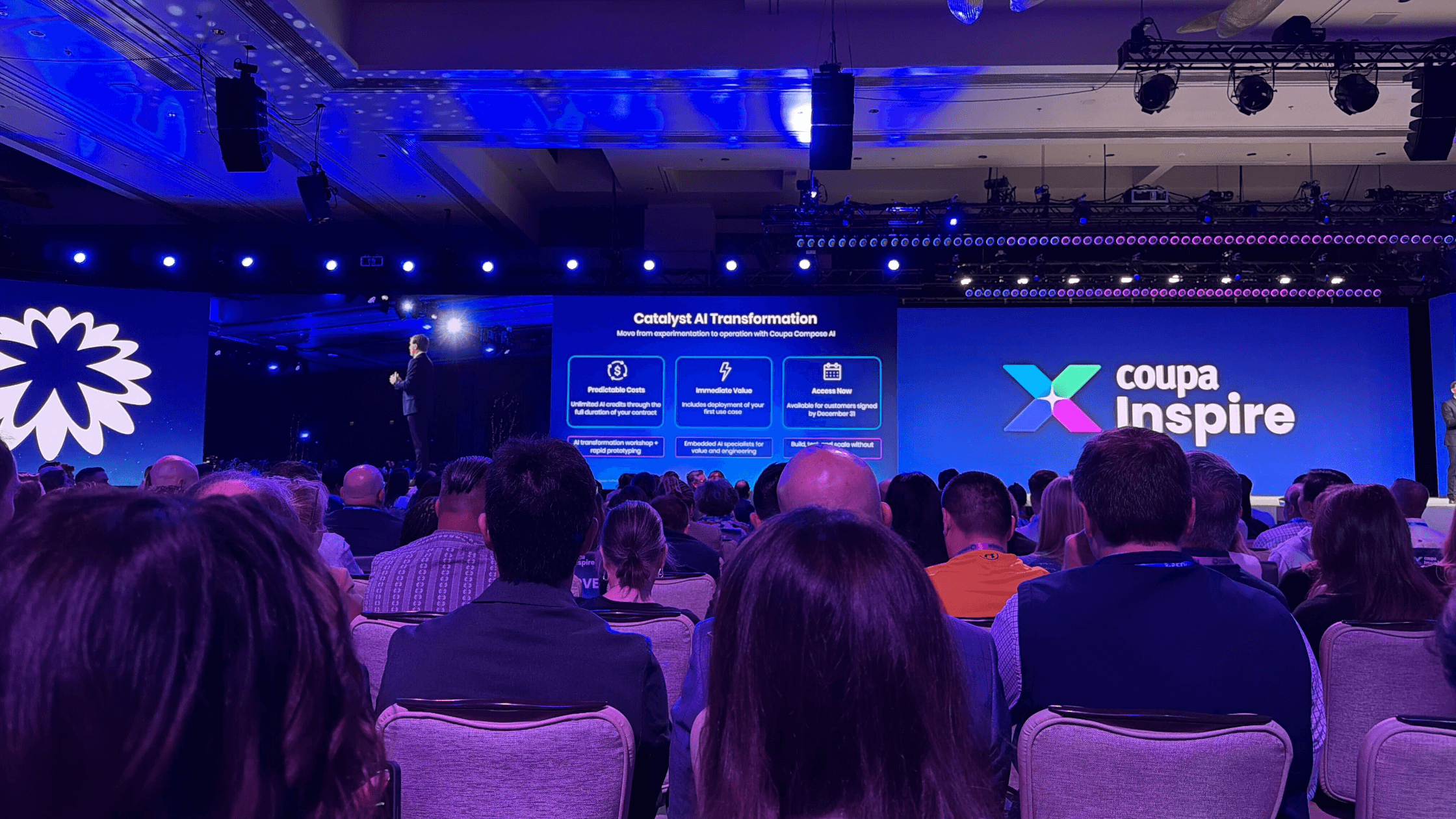
Coupa Inspire 2026 marked Coupa's 20th anniversary, and the conference reflected a company positioning itself for a new phase of growth. Coupa is building its roadmap around AI-enabled workflows, automation, and orchestration across the full spend lifecycle.
Read More
The May 2025 Most Favored Nation (MFN) executive order aims to align US drug pricing with the lowest prices paid by other developed nations. On the surface, it is a pricing policy. In practice, it is something more consequential.
Read More

Procurement, when managed strategically, can surface potential millions in unrealized savings that can be deployed to fund your next transformation initiative.
Read More
Does your "successful" technology implementation feel like a failure? It's more common than you think. This article covers nine reasons technology implementations leave organizations wanting more.
Read More

Lagging indicators dominate performance conversations because they're clear and defensible. But by the time they surface a problem, the window to act has closed. Leading indicators tell you whether you're on track while there's still time to adjust. One encourages evaluation. The other encourages action.
Read More

The gap between a well-designed future state and a successfully adopted one is almost always human. Scenario planning addresses that gap directly. It gives teams the chance to practice operating in the future state before it goes live, surfacing friction, building confidence, and creating shared understanding in a low-risk environment.
Read More
If the person who understands your platform best becomes unavailable tomorrow, could your organization confidently maintain the system, continue improving it, and onboard someone new? Key person risk poses a critical threat that organizations rarely address until it is too late — but managed services offer a solution.
Read More