

Article
Beyond Geography: Dynamic Operating Models for Market Expansion and Portfolio Transitions
Geography is a good starting point, but building a Global-Local operating model is about much more than proximity.
Read More

Combinations are not new. What is new is the velocity. The number of regimens pairing established immuno-oncology (IO) agents with novel molecules and mechanisms has grown significantly year over year, and the data supporting those pairings is maturing in ways that carry real implications for patients, drugmakers, and the broader life sciences investment thesis.
By Anshul Jain
Positive KRAS data, the continued proliferation of antibody-drug conjugates (ADCs), earlier-line treatments, and productive applications of AI in clinical oncology all drew deserved attention at this year's ASCO Annual Meeting. But for several reasons, the most compelling headline from Chicago may be the sheer diversity and expanding reach of combination therapies on display across the conference.
Combinations have been part of oncology for decades. What ASCO 2026 demonstrated is a meaningful acceleration in velocity. The number, and share, of regimens pairing established immuno-oncology (IO) agents with novel molecules and mechanisms continues to expand, and the data supporting those pairings is maturing in ways that carry real implications for patients, drugmakers, and the broader life sciences investment thesis.
Start with patients. The expanding volume of combination regimens is setting the stage for a greater number of more precisely targeted treatment options. When new agents pair effectively with established checkpoint inhibitors or next-generation ADCs, they expand the menu of regimens that physicians can match more closely to individual disease profiles, tumor biology, and treatment history. More effective combinations mean more patients with viable paths forward.
For established IO brands, the picture is equally encouraging. Every successful combination trial that includes Keytruda (pembrolizumab) or Opdivo (nivolumab) as a backbone further validates the historically large investments that brought those drugs to market. It also extends the commercial and clinical relevance of those agents into settings and populations where single-agent treatment data alone may not have reached. The return on those original investments continues to compound, even as the drugs themselves approach the later stages of their commercial lifecycles.
For emerging innovators, combination momentum reinforces the business case for continued exploration of new molecules and mechanisms. A novel target does not need to stand entirely on its own if it can demonstrate meaningful complementarity when paired with an established anchor agent. That changes the risk calculus for early-stage development programs and, in turn, for the investors backing them. The commercial viability of a new molecule strengthens considerably when it can anchor to a drug that already has broad regulatory approval, established safety data, and deep physician familiarity. This logic still drives company formation itself: a vibrant ecosystem of emerging oncology companies continue to build around the thesis that a novel molecule, paired with a legacy anchor, constitutes a therapeutically and commercially viable development strategy.
Looking at the broader oncology development community, combination proliferation also strengthens the rationale for alliance-based development models. Partnerships allow companies to share risk, split development costs, and bring complementary functional and market capabilities to bear, all while each party maintains deep focus on its respective molecular and mechanistic expertise. In a period where development costs continue to rise and timelines remain long, that kind of structural efficiency matters.
Combinations raise an important question about the future competitive and therapeutic terrain.
The advancing momentum of ADCs and next-generation checkpoint inhibitors presents multiple viable candidates. ADCs in particular showed strong data across tumor types at this year's meeting, and their precision-targeting mechanism makes them natural partners for combination approaches. Novel IO platforms are also generating early-phase results that suggest anchor potential.
But those candidates will emerge into a market where the current generation of IO anchors continues to deliver. The FDA approved Keytruda and Opdivo in 2014. Both will begin to face loss of exclusivity around 2028. And yet at ASCO, the two drugs appeared across hundreds of combination regimen abstracts, spanning tumor types, lines of therapy, and trial phases. More than a decade after their initial approvals, they remain mainstays of exploratory pairing regimens in oncology research.
That is a significant data point for anyone evaluating the competitive dynamics of the combination therapy terrain in the coming years. The next great combination anchors are emerging. The pipeline is deep and the science is promising. But the transition will not be abrupt. Legacy anchors continue to serve as critical development partners for new agents, even as their own exclusivity windows narrow.
For life sciences companies charting commercial strategy, for investors sizing the durability of IO franchises, and for the alliance and partnership teams structuring the next wave of development deals, that coexistence between legacy and emerging anchors is perhaps the most strategically consequential observation from this year's conference.
Combinations continue to multiply and accelerate, and the opportunities they create extend well beyond any single molecule.
Acquis works with life sciences organizations on commercialization strategy, launch readiness, alliance management, and go-to-market execution in oncology. Get in touch to talk through what this moment means for your organization.
Subscribe to the Acquis newsletter
Geography is a good starting point, but building a Global-Local operating model is about much more than proximity.
Read More
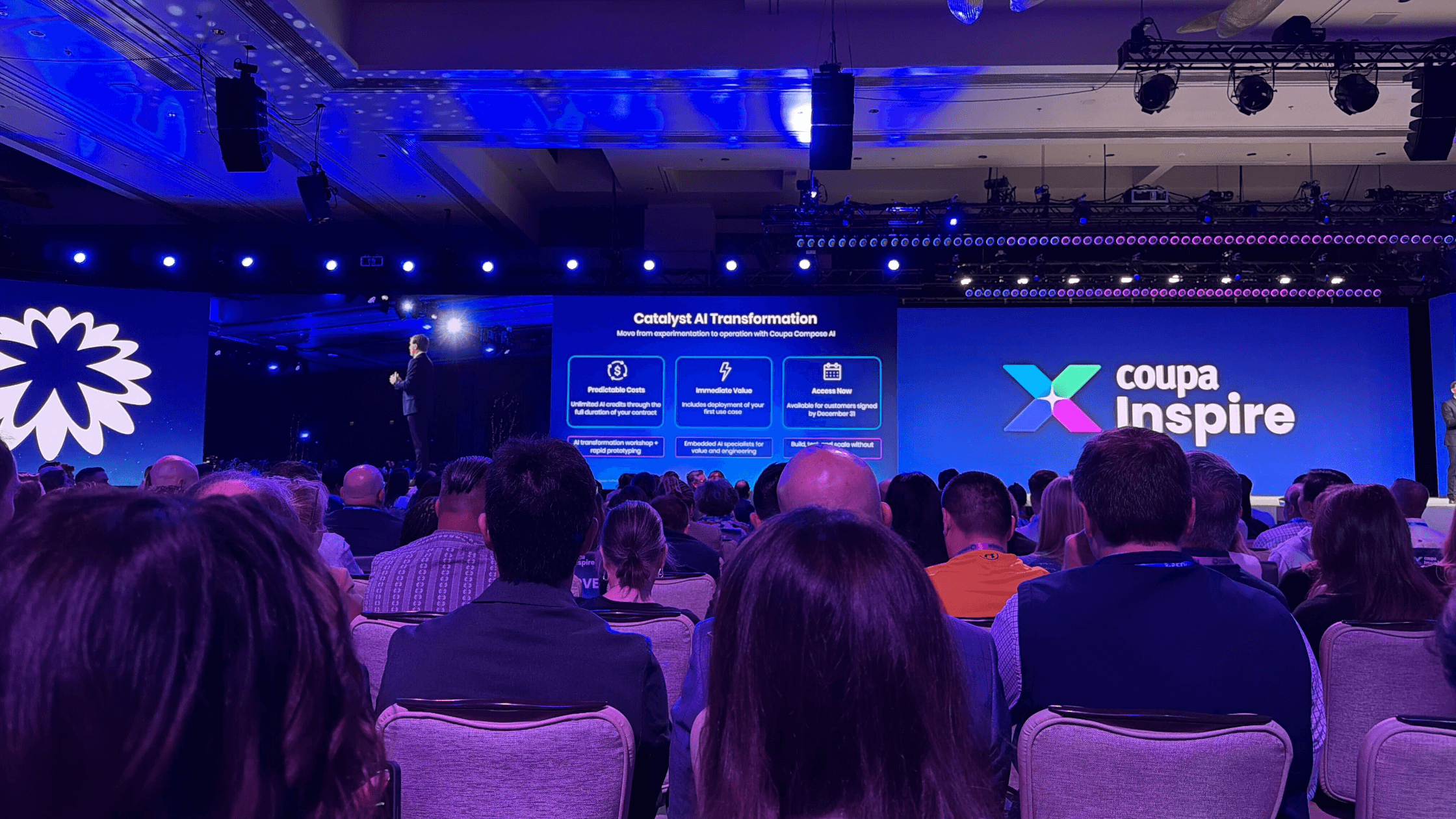
Coupa Inspire 2026 marked Coupa's 20th anniversary, and the conference reflected a company positioning itself for a new phase of growth. Coupa is building its roadmap around AI-enabled workflows, automation, and orchestration across the full spend lifecycle.
Read More

The May 2025 Most Favored Nation (MFN) executive order aims to align US drug pricing with the lowest prices paid by other developed nations. On the surface, it is a pricing policy. In practice, it is something more consequential.
Read More
Geography is a good starting point, but building a Global-Local operating model is about much more than proximity.
Read More
Coupa Inspire 2026 marked Coupa's 20th anniversary, and the conference reflected a company positioning itself for a new phase of growth. Coupa is building its roadmap around AI-enabled workflows, automation, and orchestration across the full spend lifecycle.
Read More
The May 2025 Most Favored Nation (MFN) executive order aims to align US drug pricing with the lowest prices paid by other developed nations. On the surface, it is a pricing policy. In practice, it is something more consequential.
Read More