




Article
Beyond Geography: Dynamic Operating Models for Market Expansion and Portfolio Transitions
Geography is a good starting point, but building a Global-Local operating model is about much more than proximity.
Read More

The May 2025 Most Favored Nation (MFN) executive order aims to align US drug pricing with the lowest prices paid by other developed nations. On the surface, it is a pricing policy. In practice, it is something more consequential.
By Anshul Jain, Kristian W. Honey, Pratna Ramachandran
The May 2025 Most Favored Nation (MFN) executive order aims to align US drug pricing with the lowest prices paid by other developed nations. On the surface, it is a pricing policy. In practice, it is something more consequential.
Nearly a year later, the question has shifted from what MFN means to how deeply it reaches into decisions companies are already making.
MFN does not just introduce downward pressure on price. It is poised to change where biopharma companies invest, how they design clinical programs, and how they sequence global market entry. For an industry that has long relied on the US market to anchor global operating footprints, even the possibility of sustained pricing compression forces a recalibration.
The precise shape of MFN's implementation remains uncertain, and the degree of impact will vary based on company size, therapeutic area focus, and the balance between US and ex-US revenue. But the strategic questions it raises apply broadly: how to sequence global market entry, when to bring cross-functional teams into the planning process, and what evidence is needed to support pricing across fundamentally different systems. Most organizations are not yet prepared to answer those questions.
To understand MFN’s potential to reshape strategy across the industry, we sat down with three of Acquis' life sciences experts — Anshul Jain, Kristian Honey, and Pratna Ramachandran — to explore how biopharma companies are adapting in this new environment.
For decades, geographic expansion has been a straightforward way to diversify risk and extend revenue. Under MFN, that logic could break down. Launching in ex-US markets could create reference prices that influence US pricing. The very strategy that once reduced exposure may now introduce it.
"For global companies, MFN is not a narrow pricing question," says Kristian. "It touches every part of how they plan, forecast, and execute across markets."
That dynamic would not affect all companies equally. Organizations operating in high-innovation therapeutic areas, such as rare disease or oncology, retain greater pricing leverage. Those competing in more commoditized categories face a different reality entirely. Leadership teams must determine not just where to launch, but whether global expansion strengthens or weakens their pricing position.
"MFN has the potential to further insulate the US market," shares Pratna. "If launching outside the US creates a reference price that influences domestic pricing, companies may weigh geographic expansion very differently than they have historically."
For growing companies in particular, the trade-off is stark. Pursue global scale and accept pricing exposure or constrain geographic reach to protect US economics. As Anshul puts it, "Companies want to de-risk through geographic diversification but global expansion can now create reference pricing exposure that didn't previously exist. It's a genuine strategic bind."
MFN would introduce a single benchmark across markets whose pricing structures were developed independently and reflect very different underlying systems.
In many ex-US markets, pricing reflects structured evaluation frameworks: health technology assessments, competitive reviews, and centralized negotiations with government entities. These mechanisms anchor pricing to explicit trade-offs between clinical value, patient access, and cost containment.
The US system operates differently. While Medicare and Medicaid pricing serves as a baseline reference point, the broader market lacks a standardized pricing structure. Pricing varies across a complex patchwork of channels, payers, and contracting structures.
Pratna frames the challenge directly: "The US has no equivalent evaluation structure. So when we talk about comparing prices, we have to ask, which US price? List price? Net price? Pricing varies enormously across channels and payer structures, even within the domestic market."
At the same time, it would be a mistake to view pricing pressure as purely external. Structural inefficiencies — particularly within parts of the US supply chain — have already created momentum toward pricing reform. MFN accelerates that trajectory.
The most immediate response to MFN is often framed as a timing issue: companies need to start planning earlier. The more important shift is not when planning begins but what happens during it.
"The forecasting function is particularly exposed," Kristian notes. "US pricing assumptions were relatively stable under previous models. MFN would introduce variability that existing tools weren't built to handle, and that function needs to be pulled into the planning process much earlier than it typically is."
The more significant change is the expanding role of clinical and evidence strategy in shaping commercial outcomes.
"R&D has historically focused on demonstrating safety and efficacy," Anshul explains. "The idea that clinical evidence needs to support pricing across multiple payer systems doesn't enter the conversation until far too late in most organizations."
Under MFN, that gap would become a material risk.
Phase III study design becomes a critical intervention point, not just for regulatory approval, but for establishing the evidence required to support pricing in reference-based systems. Decisions about endpoints, comparators, and patient populations have always carried downstream pricing implications. MFN would magnify their significance considerably.
Health economics and outcomes research (HEOR) and real-world evidence (RWE) planning need to be scoped in parallel with clinical trial design. Even earlier choices, such as clinical trial geography, take on new weight. Where a study is conducted influences regulatory pathways, which in turn shape pricing benchmarks across markets. Decisions made years before launch now ripple through access and pricing strategy.
This shift exposes a structural gap in many organizations: clinical development, medical, HEOR, and market access functions are not consistently aligned early enough in the process. MFN turns that misalignment into a strategic liability — or asset. For organizations that have already built early cross-functional alignment into their development process, MFN may present an opportunity for strategic acceleration.
Companies are actively exploring a range of responses to MFN, including adjusting launch sequencing, reevaluating portfolios, and testing alternative access models. But most of these levers sit in environments companies can influence, not control.
"There's a lot of discussion about different strategies," Anshul observes, "but the lever most within companies' control is the evidence you bring into pricing and reimbursement conversations. That's the part they can shape most decisively."
This reinforces a position Acquis has long held: integrated evidence planning is not a supporting workstream. It is a central strategic imperative.
The implications extend across the product lifecycle and across geographies. MFN would introduce pressure prior to multiple study investment and go/no-go launch decisions, whereas policies like the Inflation Reduction Act apply pressure closer to loss of exclusivity. Together, they create the potential for sustained pricing compression from initial market entry through eventual ramp-down.
In that environment, the quality, relevance, and timing of evidence become defining factors in commercial success. Companies that treat evidence strategy as an afterthought to regulatory approval will find themselves constrained. Those who proactively embrace integrated evidence planning from earlier lifecycle stages will retain more control over outcomes.
MFN would affect the entire industry. But not evenly across outcomes.
In an environment defined by uncertainty, speed and coherence become competitive advantages. Companies that move to understand the implications, align cross-functional teams, and adapt planning processes will have more options than those that wait for the landscape to settle fully.
"Companies that build organizational agility around regulatory change will be better positioned than those that treat it as a disruption to wait out," says Kristian. "This is unlikely to be the last significant policy shift these organizations will need to absorb."
There is also a longer-term question beginning to surface. If pricing compression becomes sustained, how does that influence upstream investment decisions?
"The Orphan Drug Act exists because certain therapeutic categories required specific incentives to remain commercially viable," Pratna observes. "As the pricing environment evolves, we may see the need for similar incentives across a broader set of therapeutic areas."
The immediate impact of MFN is pricing pressure. The more consequential impact may be how it reshapes decisions about where — and whether — companies invest in drug development. It also raises the question of how existing policy incentives may need to evolve to sustain that investment. That shift is emerging. Early signals are visible in how organizations evaluate portfolios, design studies, and prioritize markets.
MFN will not operate in isolation. It is poised to compound existing complexity across pricing, regulation, and market access. But it may also create a clear opening for organizations willing to move with intention.
The companies that adapt their planning timelines, align their teams earlier, and build evidence strategies that serve regulatory and commercial objectives will weather this shift and be better positioned on the other side of it. Growth is still possible. But it requires the right strategy and the right resources to connect that strategy to execution, from early-stage planning through launch and beyond.
Acquis is helping life sciences organizations do exactly that. We are partnering with pharma organizations — from Fortune 50 enterprises to emerging biotechs — to accelerate launch planning timelines, strengthen cross-functional coordination during clinical development, and build the strategic agility to respond to MFN and the policy shifts that will follow it.
Subscribe to the Acquis newsletter
Tags:
Geography is a good starting point, but building a Global-Local operating model is about much more than proximity.
Read More

Combinations are not new. What is new is the velocity. The number of regimens pairing established immuno-oncology (IO) agents with novel molecules and mechanisms has grown significantly year over year, and the data supporting those pairings is maturing in ways that carry real implications for patients, drugmakers, and the broader life sciences investment thesis.
Read More
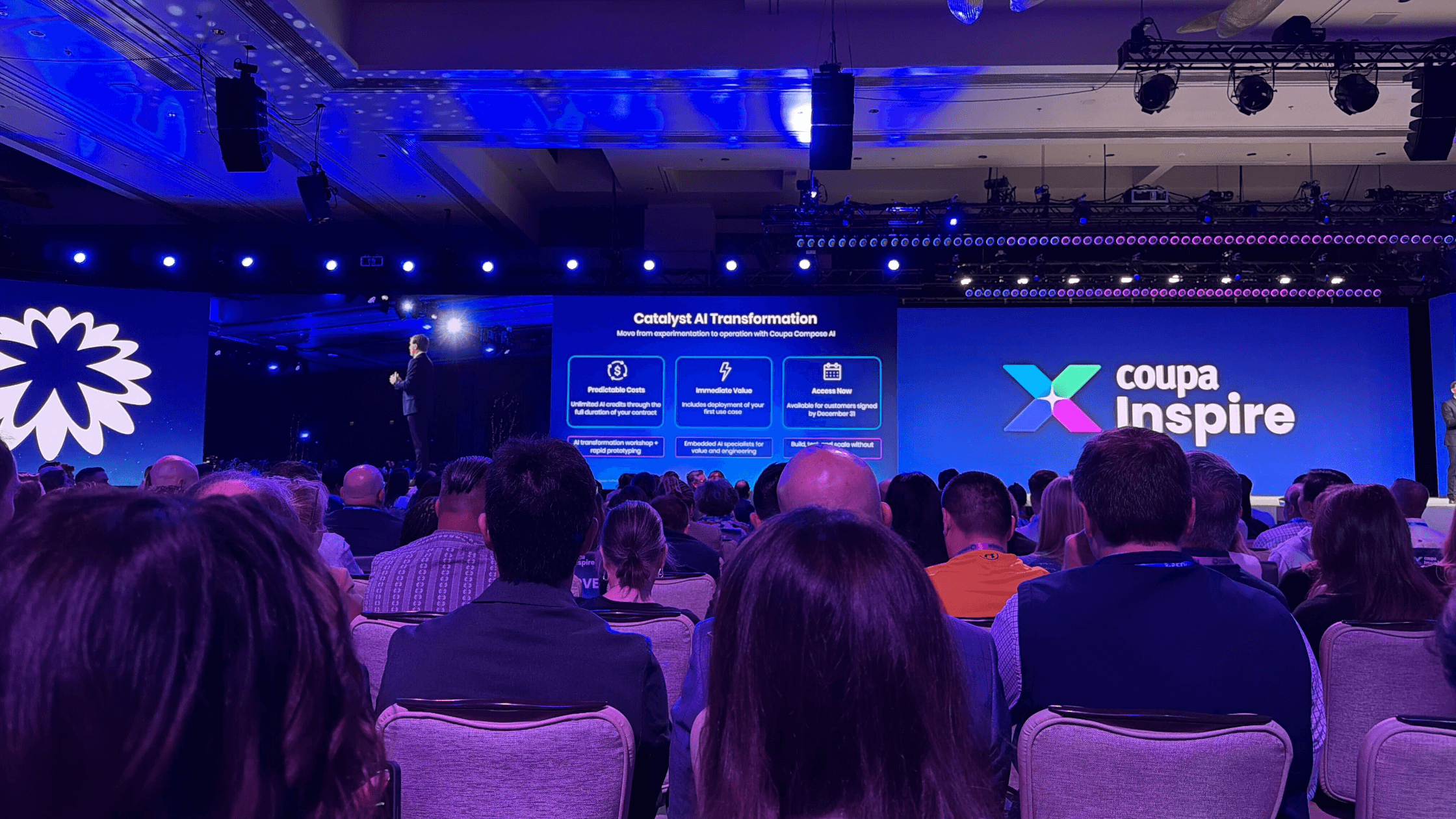
Coupa Inspire 2026 marked Coupa's 20th anniversary, and the conference reflected a company positioning itself for a new phase of growth. Coupa is building its roadmap around AI-enabled workflows, automation, and orchestration across the full spend lifecycle.
Read More
Geography is a good starting point, but building a Global-Local operating model is about much more than proximity.
Read More
Combinations are not new. What is new is the velocity. The number of regimens pairing established immuno-oncology (IO) agents with novel molecules and mechanisms has grown significantly year over year, and the data supporting those pairings is maturing in ways that carry real implications for patients, drugmakers, and the broader life sciences investment thesis.
Read More
Coupa Inspire 2026 marked Coupa's 20th anniversary, and the conference reflected a company positioning itself for a new phase of growth. Coupa is building its roadmap around AI-enabled workflows, automation, and orchestration across the full spend lifecycle.
Read More