

Article
AI Workforce Strategy Has Entered Its Next Phase
Senior leaders have moved quickly to put AI into their workforces. Now, they face the harder work of deciding what AI should change and how to prove its value.
Read More
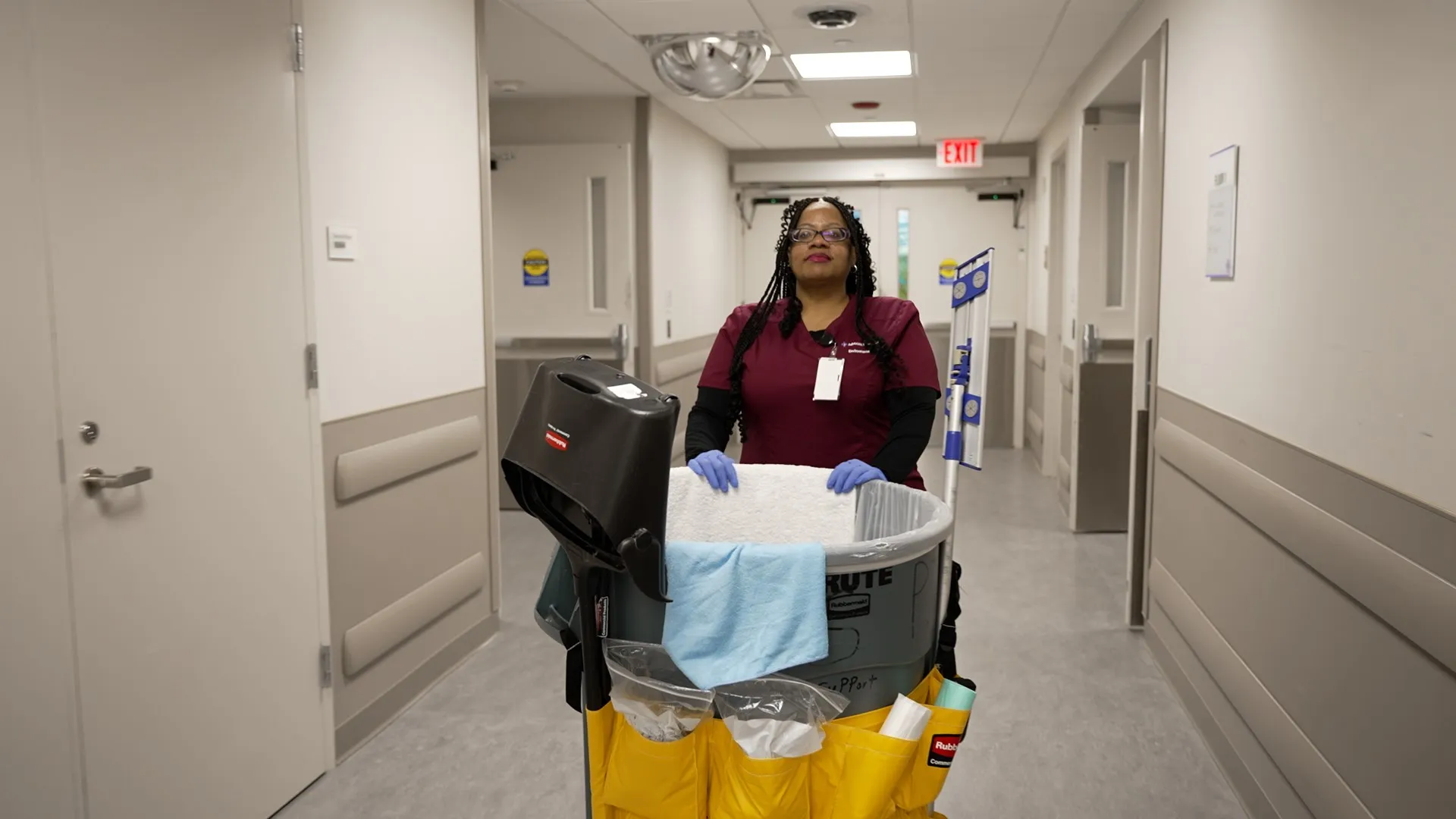
For years, benefits leaders have asked why frontline workers don't use the benefits their employers pay for. The question assumes the problem lies in awareness or access. But what if employers are missing something more fundamental about the choices these workers face?
At Acquis, our In Real Life (IRL) immersions bring leaders closer to the people living with the business challenges they work to solve. Previous immersions have explored the experiences of people using GLP-1 medications and rural oncology patients managing long treatment journeys. For this IRL, we wanted to understand frontline benefits through the eyes of the people making those decisions.
We traveled to Chicago to spend time with Cara Collective, an organization that prepares people facing barriers to employment for work and coaches them through their first year on the job. We spoke with frontline workers, took part in a benefits-selection simulation, and learned from Cara's coaches and leadership how people entering hourly roles weigh employer benefits against their immediate needs.
We arrived with a hypothesis about why workers were not using their benefits. We left questioning the premise of the question itself.
The conventional explanation is straightforward. Workers don't know what benefits are available or don't understand how to use them. Better communication, more education, or a simpler enrollment experience should help.
That assumption isn’t wrong; awareness is a real problem. In one conversation, a candidate described leaving orientation with "a folder or two full of paperwork." Another discovered a retirement account she hadn't known existed while doing her taxes.
National data shows the same gap. A 2026 KFF analysis found that 44% of lower-wage workers are offered health benefits, compared with 94% of higher-wage workers. Among those offered coverage, 49% enroll, compared with 72% of their higher-paid peers.
But awareness only explains part of the gap. At Cara, we encountered circumstances that made benefits difficult to afford or hard to justify, even when workers understood what was available.
Most employer benefits are designed around future needs. A 401(k) helps prepare for retirement. Health insurance protects against medical expenses. Preventive care can avert more serious problems down the road. Each requires workers to make a decision today in the interest of a future they may have little financial room to consider.
One Cara coach estimated that close to a quarter of his caseload declines health coverage after finding employment because the tradeoff is immediate. A premium deducted from each paycheck competes with rent, childcare, utilities, and groceries.
The cost of coverage makes that decision harder. In 2025, the average worker contribution for family health coverage reached $6,850 annually, according to the KFF Employer Health Benefits Survey. Those contributions are roughly the same dollar amount at low-wage employers as elsewhere, meaning they consume a larger share of a smaller paycheck.
Other financial pressures compound the problem. The Federal Reserve's latest household survey found that 37% of adults would not cover a $400 emergency expense entirely with cash or its equivalent, while 26% went without some form of medical care because of cost.
One Cara coach captured the challenge in a single sentence: "I'm trying to sell a future to someone who only thinks about a moment." For someone living paycheck to paycheck, enrolling in health insurance means accepting a smaller paycheck today in exchange for protection against a future expense.
Employers generally expect a raise or promotion to improve an employee's financial circumstances. For workers who rely on public assistance, the calculation can be far more complicated.
As earnings increase, eligibility for programs such as SNAP, Medicaid, housing assistance, and childcare subsidies can decrease. In some cases, the lost support exceeds the additional wages.
The Federal Reserve Bank of Cleveland has documented how benefits cliffs can turn raises into financial penalties. Cara's team described workers declining Saturday overtime because an additional shift could jeopardize a month of benefits. Others faced promotions that would increase their salaries by $20,000 while putting $70,000 in public support at risk. As one Cara leader put it, accepting that deal "makes literally no financial sense."
This isn't an isolated concern. A UNC Charlotte study found that 40% of lower-income workers had experienced being pushed past a benefits cliff.
These decisions expose a mismatch between how employers evaluate compensation and how workers experience it. A higher salary may look like progress on paper while leaving an employee with less money to cover everyday expenses.
After a day with Cara's coaches and participants, we came away with a different question for benefits leaders. What would it take for frontline workers to reach the stability they need before a benefit like health insurance becomes a realistic choice?
The answers we heard pointed beyond benefits enrollment. Workers need compensation that makes sense alongside the public assistance they rely on, support that addresses the circumstances threatening their employment, and someone they trust enough to turn to when problems arise. For employers, that calls for a broader view of what benefits are meant to accomplish.
An employer's benefits package is only one part of a worker's financial situation. Wages, insurance premiums, and public assistance interact, sometimes in ways that undermine the value of a raise or a new benefit.
Employers can start by understanding how their compensation and benefits decisions affect workers who rely on public support. Tools such as the Federal Reserve Bank of Atlanta's CLIFF calculators help workers and their coaches identify where earnings increases may trigger losses in assistance.
That understanding can inform how employers evaluate compensation changes, communicate the financial implications of enrollment, and help employees understand how a raise or promotion could affect the assistance they receive. A salary figure or enrollment guide alone rarely shows those tradeoffs.
When workers feel supported and have what they need from an employer, they stay longer. Benefits are part of that support, but they cannot address every challenge that puts employment at risk. Cara's goal is to help participants achieve one year of steady employment. That milestone depends on more than whether someone enrolls in health insurance. Housing, transportation, childcare, food, and access to essential documents can all threaten a person's ability to keep a job. One coach described a participant who slept in a locker at work because he was ashamed to admit he lost his housing. The situation nearly cost him his job.
Cara's partnership with Advocate Health offers a different way to think about employer support. In 2021, some Advocate sites had turnover rates as high as 75% in certain roles. In July 2022, the health system built a version of Cara's coaching model into its own entry-level hiring. They introduced Teammate Success Coaches for new hires in environmental services, food and nutrition, and patient transport, providing support during their first 90 days.
The findings in Cara's case study illustrate what that support can accomplish. At the start of the program, 91% of new hires reported barriers. By mid-2024, 73% of those who received support were still employed at Advocate. At the pilot site, six-month retention reached 95% among those who completed the program. The direct cost of grocery vouchers, bus passes, gas cards, and clothing averaged $198 per person. And none of it required a new health plan.
The Advocate experience also raises a question about how employers measure the value of their investments. Benefits enrollment remains useful to track, but retention can help reveal whether an organization's broader approach to employee support is working. Sometimes, a relatively modest intervention that helps someone get to work or keep food on the table can do more for retention than another addition to the benefits package.
The most valuable benefit is also the simplest: a trusted person to call when life goes sideways.
During the first week of Cara's program, Cara assigns each employee a Coach who offers support throughout the first year. Advocate provides a Navigator. In both situations, someone who would never tell a manager, "I don't have enough money for food," has a trusted support person who will listen without judgment and likely provide a cafeteria pass or grocery delivery.
Cara's coaches described how difficult asking for help can be for people who have spent years hearing no. Building trust takes repeated interactions, familiar faces, and conversations that extend beyond immediate work responsibilities. Over time, those relationships make it easier for employees to raise a problem before it threatens their ability to stay employed.
The time at Cara challenged the Acquis team to look beyond what employers can measure from a distance. A health plan can look valuable on paper and still be out of reach for someone choosing between a premium and groceries. A promotion can register as progress while leaving a worker worse off financially. When employers rely on the numbers alone, these realities can remain invisible.
That raises harder questions. What assumptions are shaping your benefits strategy? How often do you judge whether a strategy is working by what the data shows, without asking the people living with its consequences?
Getting closer to the people an organization aims to support can expose gaps between what a strategy is designed to do and what employees experience. It can also reveal opportunities to make that strategy more effective, starting with a clearer understanding of the challenges people face.
That's the purpose of an Acquis IRL. We step outside the boardroom to understand the lived experiences behind the business challenges we help solve. The closer we get to those realities, the better equipped we are to build strategies that work for the people they're meant to serve.
Interested in attending an upcoming IRL? Contact us.
Subscribe to the Acquis newsletter
Tags:
Senior leaders have moved quickly to put AI into their workforces. Now, they face the harder work of deciding what AI should change and how to prove its value.
Read More

Geopolitical disruption has become a standing risk for drugmakers. It calls for a standing response: a resilient, adaptable operating model built to withstand these fault lines and pressure points.
Read More

Salesforce customers already pay to store and manage their data on the platform. But as Salesforce continues its push toward an agentic future, they may pay again every time an AI agent accesses it.
Read More
Senior leaders have moved quickly to put AI into their workforces. Now, they face the harder work of deciding what AI should change and how to prove its value.
Read More
Geopolitical disruption has become a standing risk for drugmakers. It calls for a standing response: a resilient, adaptable operating model built to withstand these fault lines and pressure points.
Read More
Salesforce customers already pay to store and manage their data on the platform. But as Salesforce continues its push toward an agentic future, they may pay again every time an AI agent accesses it.
Read More