



Article
Beyond Geography: Dynamic Operating Models for Market Expansion and Portfolio Transitions
Geography is a good starting point, but building a Global-Local operating model is about much more than proximity.
Read More

AI could transform exit optimization into systematic value maximization. Pattern recognition across thousands of transactions, predictive analytics for buyer behavior, and dynamic narrative construction could help firms identify the perfect moment, find the right buyers, and position assets for maximum value. This represents opportunity arbitrage at its most critical — applying intelligence to the moment that determines returns.
By Kit Rehberger, Ahmed Malik
A portfolio company sold six months too early might leave 30% of value unrealized. Sold six months too late, it might miss the market window entirely. Yet most firms still approach exits with the same tools they've used for decades: banker relationships, market instinct, and comparable transaction multiples that may or may not reflect current reality.
Consider the stakes: a $500 million exit at 12x EBITDA versus 14x represents $80 million in additional proceeds. Multiply that across a portfolio where timing and positioning could impact valuations by 15–20%, and the difference between median and upper-quartile performance becomes clearer.
AI gives firms a systematic method for capturing that value. Pattern recognition across thousands of transactions, predictive analytics for buyer behavior, and dynamic narrative construction can help firms identify the right moment, find the right buyers, and position assets for maximum value. This is opportunity arbitrage at its most critical: applying intelligence to the moment that determines returns.
Traditional exit timing relies on visible markers: EBITDA growth stabilizing, market multiples peaking, and strategic buyers consolidating. But the signals that truly predict optimal exit windows are often more subtle and interconnected than quarterly financials reveal.
AI systems trained on thousands of exits could identify invisible patterns. A software company might show standard financial metrics, but deeper analysis reveals that customer acquisition costs have started creeping up while lifetime values plateau, suggesting the growth story has 6–12 months before it becomes obviously challenged. A manufacturing business might post strong EBITDA, but employee turnover in critical roles and deferred maintenance schedules indicate operational excellence is about to deteriorate.
These patterns vary by sector and business model. In healthcare services, the combination of payor mix shifts, provider retention rates, and regulatory change calendars might predict valuation peaks. In B2B software, the interaction between logo retention, expansion revenue trends, and competitive win rates could signal whether multiples will expand or contract over the next quarters.
The value comes from connecting signals from different parts of the business into coherent predictions. An AI system might recognize that when three specific operational metrics align, such as customer concentration decreasing, gross margins stabilizing, and working capital normalizing, valuations typically peak within nine months.
Many fund managers use probabilistic, stochastic forecasting to model exit timing. Agentic AI helps flatten the mountain, especially for funds that lack access to an army of statistical modelers and PhDs.
Investment bankers excel at identifying obvious buyers: the strategic competitors, the larger PE funds, the usual suspects who appear in every process. But the buyer who pays the highest multiple often comes from outside the standard list. An international strategic entering the market, a family office seeking a platform, a continuation fund with a specific thesis.
AI could systematically map every potential buyer by analyzing patterns that humans might miss. Which conglomerates have been acquiring similar assets in other geographies? Which mid-market funds just raised capital with a thesis that aligns with the asset? Which strategics have new leadership that historically drives acquisition activity?
Consider a specialty chemicals business preparing for exit. Traditional banker outreach might identify 30–40 potential buyers. AI analysis could surface that an international conglomerate has acquired three similar businesses in Europe over 18 months, that two potential strategics have announced US expansion plans, and that a family office has been building a specialty materials platform. The buyer universe expands from 40 to 70. And the new entrants are often willing to pay premium multiples for strategic entry.
This mapping extends beyond identification to prediction. By analyzing historical behavior, AI could predict which buyers are likely to bid aggressively, which will re-trade, and which will move quickly through diligence. A strategic that historically pays 15% premiums for market entry, a sponsor that consistently re-trades on working capital, a family office that closes in 60 days: these patterns inform process strategy.
This shift gives investment bankers room to build further relationships and rely on their judgment rather than rote market mapping.
Every buyer evaluates through their own lens. A strategic buyer focused on cost synergies needs different proof points than a financial sponsor focused on buy-and-build potential. Yet most exit processes tell one story to all buyers, hoping it resonates broadly enough to drive competition.
AI could enable dynamic narrative construction tailored to each buyer's specific investment criteria. By analyzing what has resonated in previous transactions, these systems could identify which themes, metrics, and proof points are most likely to drive value for specific buyer types.
For a strategic buyer rolling up the industry, the narrative might emphasize customer relationships that don't overlap, operational capabilities that complement their platform, and cultural fit with their organization. The data room would prioritize customer concentration analysis, operational benchmarking, and integration planning.
For a financial buyer building a platform, the story might focus on the management team's ability to execute acquisitions, the fragmentation of the remaining market, and the repeatability of the value creation playbook. The same business, positioned differently, could command a 20% valuation premium simply by aligning the narrative with what the buyer values.
This customization extends to process design as well. Analysis might reveal that strategics in this sector typically need 90 days for diligence while financial buyers move in 60; that Asian buyers require different ESG documentation than European ones; that technology buyers focus on code reviews while industrial buyers prioritize customer contracts. The process itself becomes optimized for the buyers most likely to pay premium valuations.
The work that drives premium exits happens months before the process launches. Management team preparation, operational improvements, and story refinement determine whether buyers see a polished gem or a fixer-upper. But most firms follow generic exit preparation checklists that don't reflect what drives valuations in specific situations.
AI could identify which improvements move valuations versus which ones are noise. For a B2B software company, cleaning up the cap table and documenting the tech stack might add 10% to valuation, while achieving SOC 2 compliance and building a customer success function might add nothing. For a healthcare services business, the priorities might completely reverse.
This targeted preparation extends to timing. Analysis might reveal that manufacturing buyers in this sector typically pay 1.5x higher multiples in Q1 when they have fresh capital allocations; that software strategic buyers move most aggressively in Q3 before year-end planning; that continuation funds are most active in months 7–8 of the fund lifecycle. These patterns inform not just when to exit, but when to begin preparation.
Every exit generates lessons: which positioning resonated, which buyers performed, and what diligence issues arose. But these insights typically disappear when deal teams disperse and bankers move on. The next exit starts from scratch, repeating mistakes and missing opportunities.
AI can capture and systematize exit expertise across the portfolio. Approaches that justified premium valuations in one exit become available for similar businesses. Buyer concerns that surfaced repeatedly in diligence get addressed before the next process launches. Narratives that drove competitive dynamics become templates.
This institutional knowledge compounds over time. Each exit refines pattern recognition, improves buyer mapping, and sharpens narrative construction. The firm's tenth software exit draws on lessons from the previous nine, systematically rather than anecdotally.
Exit execution requires human judgment that no AI can replace. Reading the room in a management presentation, handling a re-trade, managing partnership dynamics through a contentious negotiation: these demand experienced professionals. AI amplifies this expertise by giving those professionals the systematic analysis that informs their decisions.
Investment bankers and operating partners can focus on building buyer relationships and coaching management teams while AI handles buyer mapping and behavior prediction. Deal teams can concentrate on negotiation strategy while AI identifies optimal timing and positioning. The combination produces better exit outcomes than either discipline achieves alone.
Exit execution will always require human judgment. Knowing when to walk away, when to push for a final round, when the buyer across the table is bluffing: none of that gets automated. What AI changes is the quality of the information those decisions get made on.
For firms where a single exit can swing fund performance by a quartile, that is a material difference. It is the difference between a fund story and a footnote.
Subscribe to the Acquis newsletter
Tags:
Geography is a good starting point, but building a Global-Local operating model is about much more than proximity.
Read More

Combinations are not new. What is new is the velocity. The number of regimens pairing established immuno-oncology (IO) agents with novel molecules and mechanisms has grown significantly year over year, and the data supporting those pairings is maturing in ways that carry real implications for patients, drugmakers, and the broader life sciences investment thesis.
Read More
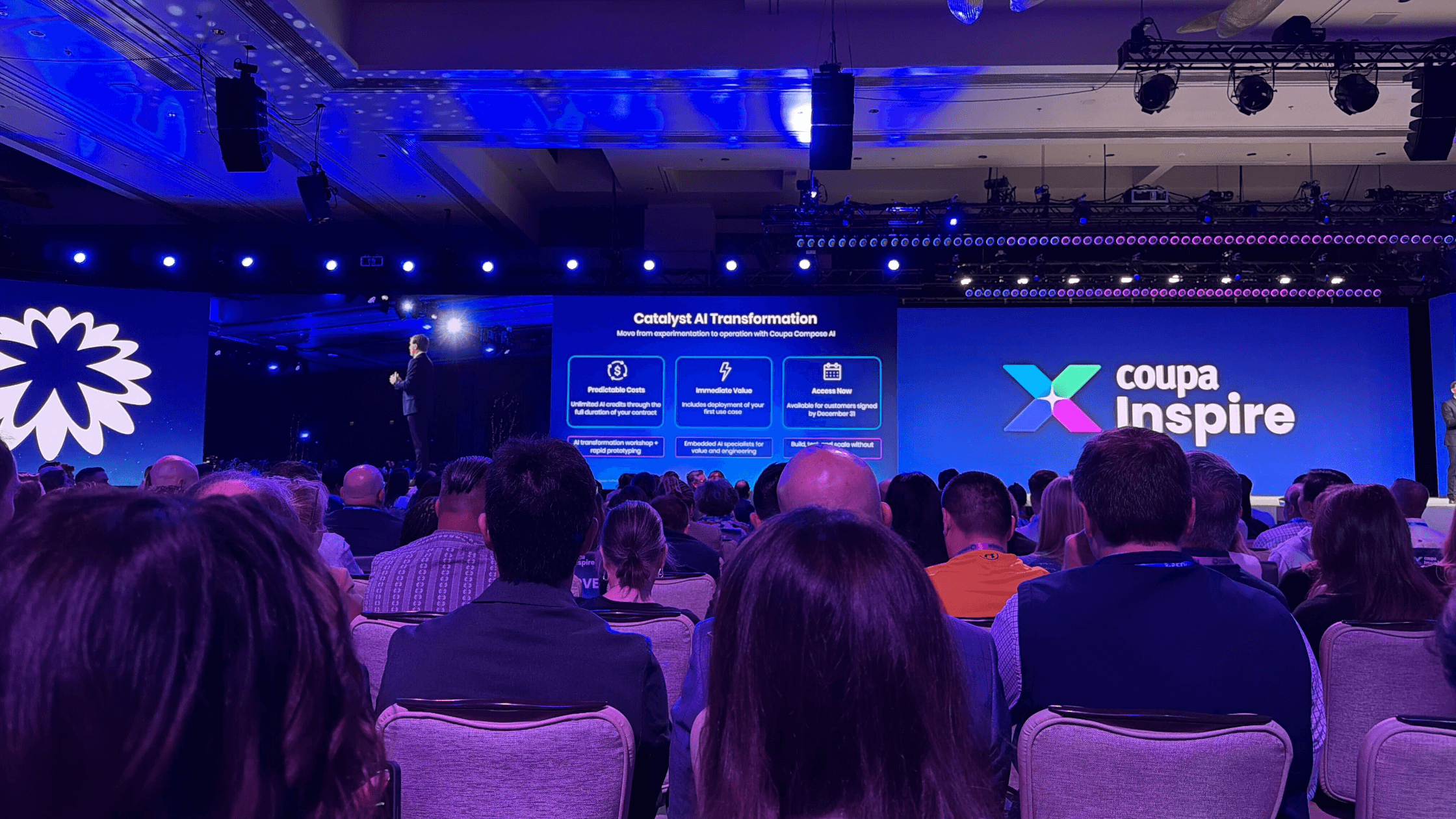
Coupa Inspire 2026 marked Coupa's 20th anniversary, and the conference reflected a company positioning itself for a new phase of growth. Coupa is building its roadmap around AI-enabled workflows, automation, and orchestration across the full spend lifecycle.
Read More
Geography is a good starting point, but building a Global-Local operating model is about much more than proximity.
Read More
Combinations are not new. What is new is the velocity. The number of regimens pairing established immuno-oncology (IO) agents with novel molecules and mechanisms has grown significantly year over year, and the data supporting those pairings is maturing in ways that carry real implications for patients, drugmakers, and the broader life sciences investment thesis.
Read More
Coupa Inspire 2026 marked Coupa's 20th anniversary, and the conference reflected a company positioning itself for a new phase of growth. Coupa is building its roadmap around AI-enabled workflows, automation, and orchestration across the full spend lifecycle.
Read More