





Article
Beyond Geography: Dynamic Operating Models for Market Expansion and Portfolio Transitions
Geography is a good starting point, but building a Global-Local operating model is about much more than proximity.
Read More

Construction sales leaders operate under constant pressure. Generate more leads. Build a stronger pipeline. Win the bids that matter. Do it all with limited resources and a team already stretched across active pursuits. Fortunately, Salesforce gives sales leaders the visibility and insight they need to generate leads, pursue the right work, and win more often.
By Andrea Gardner
Home
Our Thinking
Winning the Right Work: How Salesforce Helps Construction Sales Leaders Build Smarter Pipelines
Construction sales leaders operate under constant pressure. Generate more leads. Build a stronger pipeline. Win the bids that matter. Do it all with limited resources and a team already stretched across active pursuits. The ones who manage it well have figured out how to be selective and strategic with limited resources.
Salesforce helps sharpen that edge. Not by adding complexity, but by giving sales leaders the visibility and insight they need to generate leads, pursue the right work, and win more often.
The best construction opportunities come through relationships: repeat clients, referrals, introductions from partners and past collaborators. Strong sales teams invest heavily in those relationships, and it pays off.
The question is whether the full value of those relationships is visible across the organization. A contact mentions a future project, but the person who hears it may not be the right one to act on it. A key decision-maker retires, and the institutional knowledge about that account may leave with them. Someone on the team has a connection that could open a door, but no one else knows it exists.
Salesforce's Einstein Relationship Insights helps surface those connections. It maps relationships between people and companies, drawing from CRM data, email, calendars, and public sources, so sales leaders can see who knows who across the organization and its accounts.
In practice, this means leads are less likely to go unnoticed. When a client signals that a new project is on the horizon, you can see who else at that organization is involved, whether anyone on your team has an existing relationship, and what the best path forward looks like. The relationships your team has built become a shared asset, not just individual knowledge.
Strong construction sales teams already know that not every opportunity is worth chasing. Bidding is expensive. It pulls your best people off other work, burns hours on proposals, and ties up resources that could be spent on higher-probability pursuits.
The bid/no-bid decision is one of the highest-leverage calls a sales leader makes. Get it right, and your team focuses energy where it counts. Get it wrong, and you're investing in pursuits that don't play to your strengths while better-fit work goes to competitors.
Most teams have a process for this, but the quality of that process depends on the quality of the information behind it. Salesforce strengthens those decisions by making performance data and capacity data available in real time.
Sales leaders can review win rates by project type, region, delivery method, and funding source before committing to a pursuit. They can see where the company consistently performs well and where the fit is weaker. Dashboards that show resource availability, equipment utilization, and active project commitments give a realistic picture of what the team can take on.
The result is faster, more confident decisions, with the data to back them up.
Generating leads and choosing the right pursuits matter, but so does what happens between first conversation and closed deal.
Construction sales cycles are long and involve multiple stakeholders, layers of decision-making, and technical requirements that evolve over time. Keeping pursuits on track requires consistent qualification and follow-through across every stage.
Salesforce gives sales teams a structured path from lead to opportunity to closed deal. As conversations progress, reps capture qualifying information (project type, scope, region, timeline, budget, and decision-makers) and that information stays visible to leadership at every stage.
Approval workflows enable the right people to weigh in at the right time. When an opportunity reaches the bid/no-bid stage, leadership has a structured request with context attached. Managers can review the opportunity, check the dashboards, and make a call without chasing down details.
This consistency compounds over time. When every pursuit follows the same process, patterns emerge. Which lead sources convert best? Where do deals tend to stall? What separates wins from losses? Those insights are what move win rates over time: steady process discipline that builds a clearer picture with each pursuit.
Winning the bid is a milestone, not the finish line. The handoff to project execution has real implications for client relationships and the company's reputation.
The strongest construction firms treat this transition as a deliberate process. Salesforce supports that by integrating with construction project management platforms like Procore so that when a deal closes, the project can spin up with scope, timeline, contacts, and key details flowing directly from the opportunity record into the project setup.
Equally important, delivery data flows back. When milestones are hit or projects close out, that information returns to Salesforce. Account records stay current, and sales leaders maintain an accurate view of client history across every engagement.
This two-way visibility helps sales leaders make better commitments on the front end and positions the team to earn repeat work on the back end. When you can see the full history of an account across every project, the next conversation starts from a position of credibility.
The construction firms that win consistently have moved beyond reacting to what comes in. They know where their leads originate and which sources are worth investing in. They pursue opportunities that match their strengths and capacity. They make pipeline decisions with data behind them.
Salesforce gives sales leaders the infrastructure to operate that way, with visibility into relationships, performance patterns, team capacity, and client history that compounds over time. The result is a pipeline that is measurable, predictable, and built to grow.
Ready to build a smarter pipeline with Salesforce? Acquis is here to help. Connect with us to get started.
Subscribe to the Acquis newsletter
Tags:
Geography is a good starting point, but building a Global-Local operating model is about much more than proximity.
Read More

Combinations are not new. What is new is the velocity. The number of regimens pairing established immuno-oncology (IO) agents with novel molecules and mechanisms has grown significantly year over year, and the data supporting those pairings is maturing in ways that carry real implications for patients, drugmakers, and the broader life sciences investment thesis.
Read More
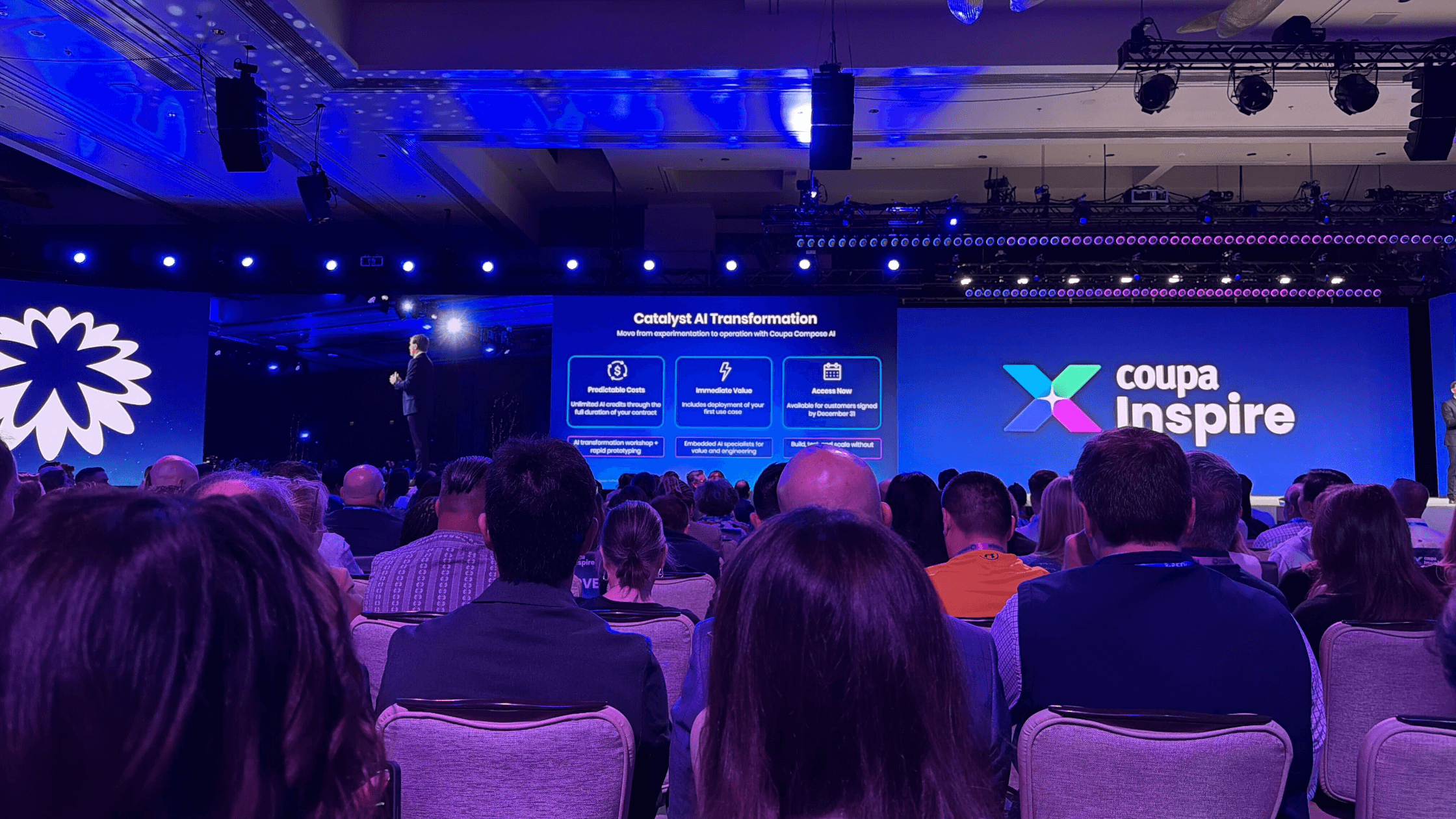
Coupa Inspire 2026 marked Coupa's 20th anniversary, and the conference reflected a company positioning itself for a new phase of growth. Coupa is building its roadmap around AI-enabled workflows, automation, and orchestration across the full spend lifecycle.
Read More
Geography is a good starting point, but building a Global-Local operating model is about much more than proximity.
Read More
Combinations are not new. What is new is the velocity. The number of regimens pairing established immuno-oncology (IO) agents with novel molecules and mechanisms has grown significantly year over year, and the data supporting those pairings is maturing in ways that carry real implications for patients, drugmakers, and the broader life sciences investment thesis.
Read More
Coupa Inspire 2026 marked Coupa's 20th anniversary, and the conference reflected a company positioning itself for a new phase of growth. Coupa is building its roadmap around AI-enabled workflows, automation, and orchestration across the full spend lifecycle.
Read More